Food and nutrition security
We help households grow a variety of nutritious food, store it well and use it to feed their families all year round, through improved production, kitchen gardens and nutrition education.
Helping rural families grow enough, earn enough and stay healthy, today and for generations to come.
Our work brings together food, farming, natural resources, skills and clean water, because a family's wellbeing depends on all of them. We work alongside smallholder farmers, women and young people to build livelihoods that last, and that protect the land they depend on.
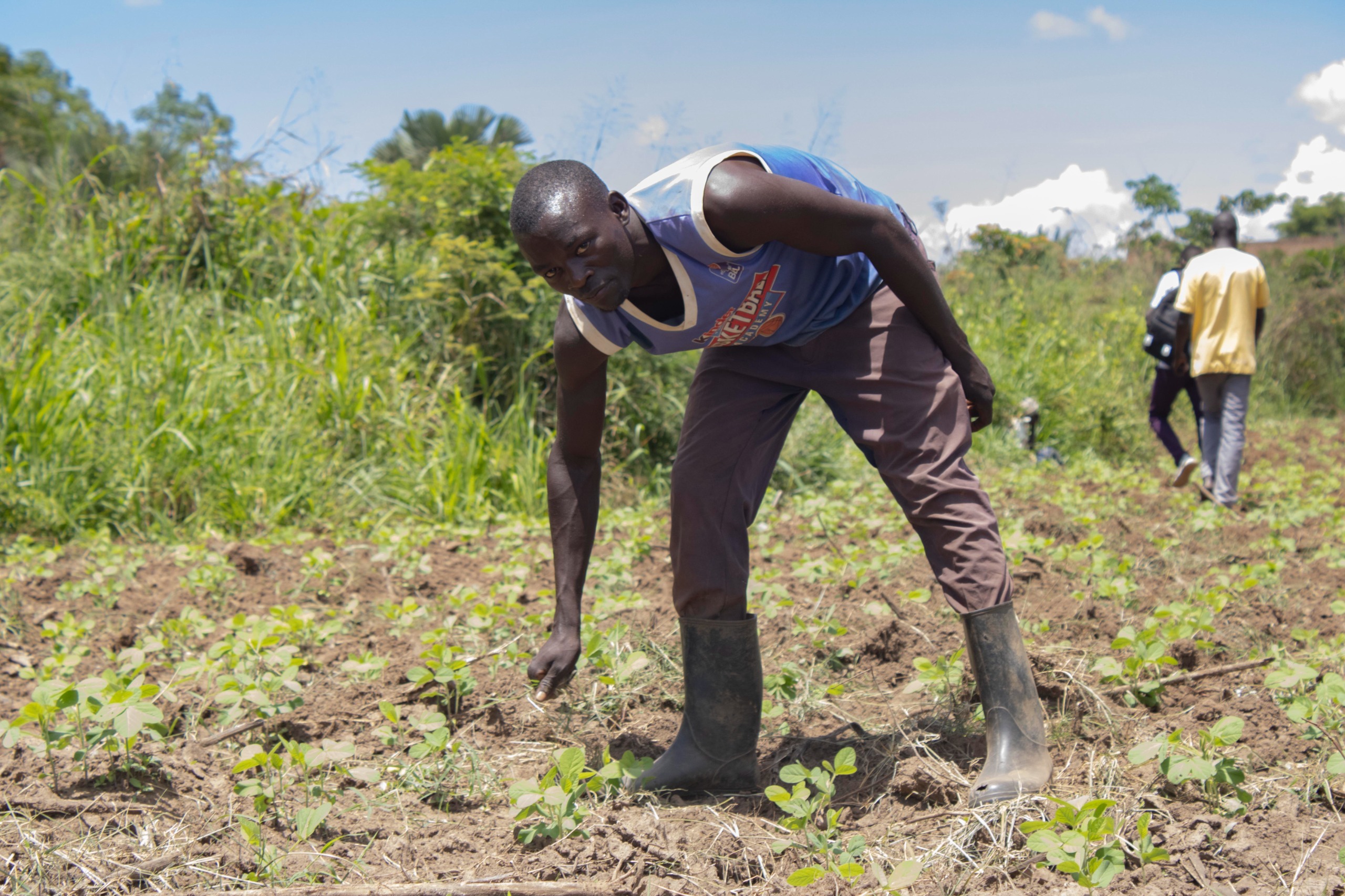
Six connected areas of work, each one making the others stronger.
We help households grow a variety of nutritious food, store it well and use it to feed their families all year round, through improved production, kitchen gardens and nutrition education.
Droughts, erratic rains and floods hit smallholder farmers first. We help communities adopt climate-smart practices so they can protect their harvests and recover faster from shocks.
We promote farming that works with nature: diverse crops, healthy soils, local seed and organic methods that lower costs for farmers and keep the land productive.
Land, forests, wetlands and water are the foundation of rural life. We support communities, especially women, to manage these resources fairly and sustainably.
We build business, digital and practical skills that turn into income, from farmer groups running profitable enterprises to young people starting work.
Safe water, decent sanitation and good hygiene keep families healthy enough to work, farm and learn. We link WASH with our farming and nutrition work so the gains reinforce each other.
Women and young people carry much of the work in rural livelihoods but have less access to land, skills and income. We design our programs to change that.
We work with communities, farmer groups, local governments, research institutions and donors, so that results reach farmers and continue after a project ends.
We focus on knowledge and tools that families can use and pass on, from farming methods to business skills.
A selection of ongoing and completed FINASP programs under this thematic area.
Kole, Lira, Dokolo & Alebtong
Funded by the Embassy of the Kingdom of the Netherlands and led by a GOAL consortium, INSPIRE advances sustainable land use and food security for smallholder farmers.
Read moreKapchorwa, Bukwo & Kween
A 12-month consolidation initiative, running through August 2027, that protects earlier gains and keeps essential services reaching smallholder farmers.
Read moreLira, Kole, Gulu, Amuru, Nwoya & Adjumani
Commissioned by Germany's BMZ and implemented by GIZ, PRUDEV II builds the business and digital skills rural households need to earn a better living.
Read moreOtuke District
Tackles land disputes in Lango by empowering women and promoting fair management of land resources.
Read moreLira & Soroti
Funded by the European Commission through UFAAS, the programme supported small-scale producers in agroecology and the transformation of local food systems.
Read moreSoroti District
Supported by Latek Stay Foundation, this project helped farmers grow more organic cereals, raising both food supply and income.
Read moreWant to see everything FINASP has delivered, and what we are doing now?